Cryptocurrency and blockchain technology have quickly developed from specialized hobbies into necessary competencies for anybody joining the digital finance sector. Coursera offers a variety of trustworthy cryptocurrency courses to help you progress, whether you’re a professional working on blockchain security, a developer hoping to create decentralized applications, or a total novice interested in how Bitcoin operates.
I assessed Coursera’s top programs based on course depth, practical experience, real-world relevance, and the skills they develop for 2026 and beyond in order to streamline your search. I’ll walk you through the Top 9 Crypto Courses on Coursera in this guide, explaining what each course covers, who should take it, and how long it takes.
Top 9 Crypto Courses On Coursera 2026
Whether you’re a beginner or an advanced learner, these curated courses cover the most relevant topics in blockchain and cryptocurrency today:
| Course | Provider / University | Level | Link | Best For |
|---|---|---|---|---|
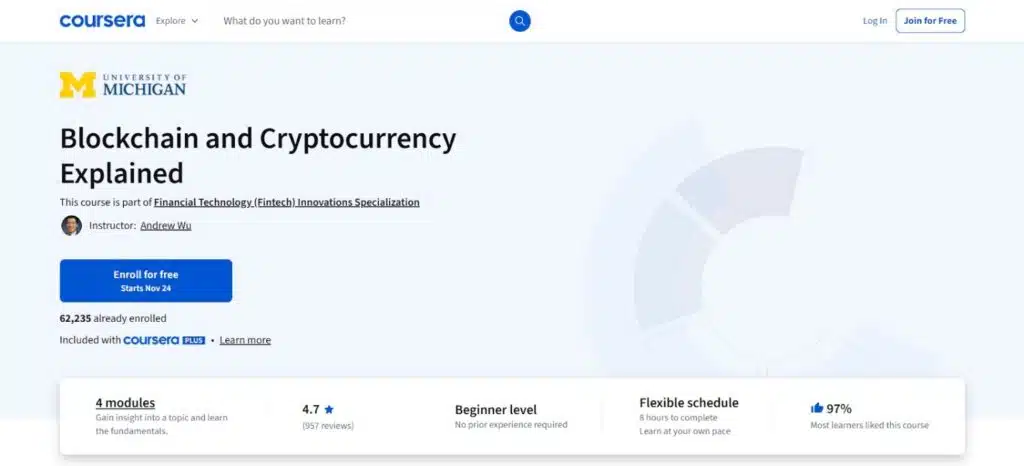
| Blockchain and Cryptocurrency Explained | University of Michigan | Beginner | Link | Beginners who want a clear, non-technical introduction |
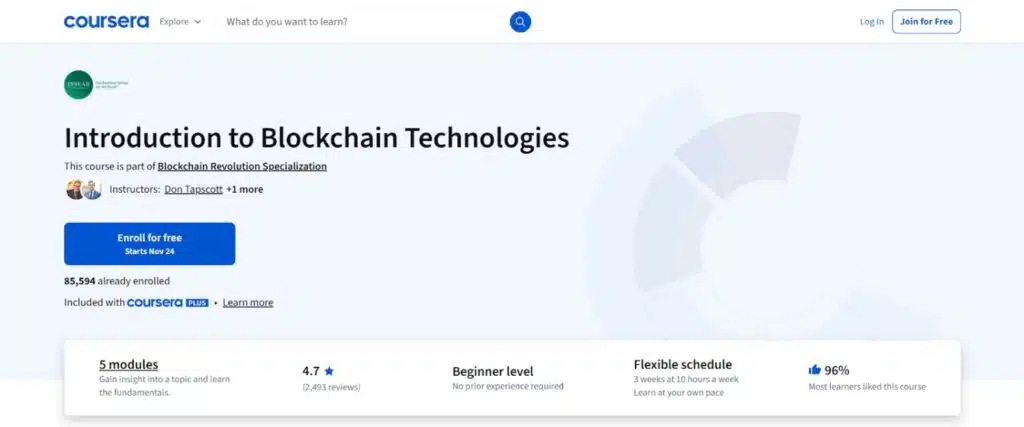
| Introduction to Blockchain Technologies | INSEAD | Beginner | Link | Learners wanting an academic yet practical foundation |
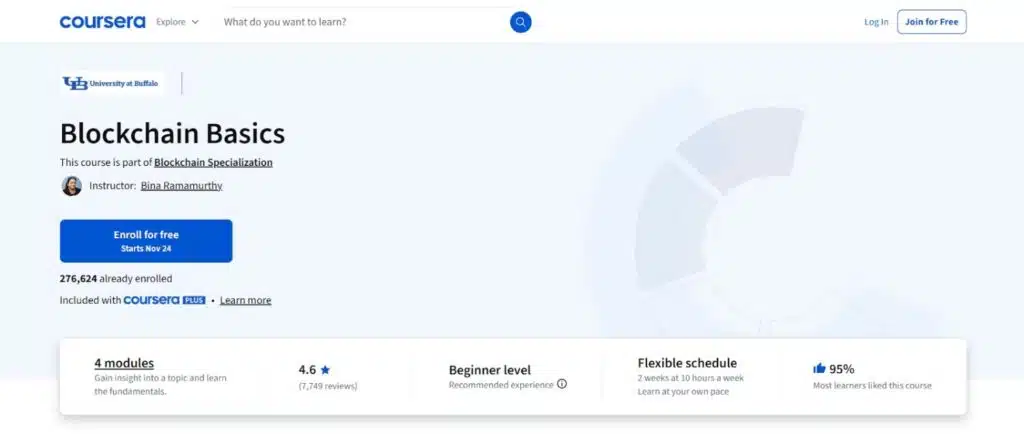
| Blockchain Basics | University at Buffalo | Beginner | Link | Beginners with light programming experience |
| Bitcoin Scaling & Security | AI CERT | Intermediate | Link | Learners who know blockchain basics and want Bitcoin-focused skills |
| Bitcoin Transaction & Network Security | AI CERT | Intermediate | Link | Students who want deeper Bitcoin security and transaction-level knowledge |
| From Blocks to Code: Bitcoin Developer Essentials (Specialization) | AI CERT | Intermediate | Link | Aspiring Bitcoin developers with basic coding skills |
| Blockchain Security – Intermediate Practices | LearnQuest | Advanced | Link | Developers and cybersecurity learners focusing on blockchain risks |
| Bitcoin Integration & Future Trends | AI CERT | Advanced | Link | Learners wanting real-world integration and future blockchain applications |
| Advanced Blockchain Development & Solidity Projects | Packt Publishing | Advanced | Link | Developers who want practical Solidity and DApp-building experience |
Note: All of these courses are free to enroll. However, if you want a certificate of completion, you may need to pay a fee, which varies by course. As an alternative, you can subscribe to Coursera Plus for $23/month or $156/year, which gives unlimited access to over 7,000 courses—including all of the ones listed above—with certificates included.
1. Blockchain and Cryptocurrency Explained
| Provided By | University of Michigan |
| Instructor | Andrew Wu |
| Level | Beginner |
| Modules | 4 |
| Duration | 8 hours (At your own pace) |
| Assignments | 6 |
| Languages | Available in 23 languages |
The University of Michigan’s Blockchain and Cryptocurrency Explained course, instructed by Andrew Wu, is geared for beginners and aims to present blockchain and cryptocurrency principles in an understandable, non-technical manner. Anyone interested in digital finance who wants a solid conceptual basis before delving into more technical courses will find it excellent.
It covers important subjects like the operation of cryptocurrencies, blockchain technology, and real-world commercial and financial applications. With texts, interactive activities, and video lectures, students can get practical information without any prior coding experience.
The course also covers Blockchain as an asset and business. It is ideal for total beginners who want to lay a strong foundation before taking technical classes. Before taking intermediate or advanced crypto classes, I advise anyone who wants to gain foundational knowledge to start with it.
2. Introduction To Blockchain Technologies
| Provided By | INSEAD |
| Instructor | Don Tapscott and Alex Tapscott |
| Level | Beginner |
| Modules | 5 |
| Duration | 10 hours a week (~3 weeks) |
| Assignments | 31 |
| Languages | Available in 29 languages |
Don and Alex Tapscott’s Introduction to Blockchain Technologies at INSEAD is a beginner-friendly course that offers a strong theoretical and practical foundation in blockchain. It is intended for students without any prior knowledge who wish to comprehend blockchain architecture, design principles, and practical applications.
In this, students learn about private versus public blockchains, ledgers, ecosystem issues, and applications in a variety of sectors, including technology, supply chain, and finance. The combination of books, interactive exercises, and video lectures guarantees that students not only grasp the theory but also comprehend how blockchain can be used in real-world situations.
The course is appropriate for students who seek both academic and practical knowledge because it also touches on use cases in supply chain, finance, and other industries. It is highly recommended before moving on to more technical courses.
For students entering the crypto world, learning doesn’t end with completing a course, it also requires staying updated with market movements, new token launches, and major ecosystem developments. Latest Crypto news from Colexion.io can help learners follow real-time trends and better understand how the industry evolves day by day. By combining structured Coursera courses with continuous news monitoring, students can build both foundational knowledge and practical awareness of the crypto space.
3. Blockchain Basics
| Provided By | University at Buffalo |
| Instructor | Bina Ramamurthy |
| Level | Beginner with knowledge of coding |
| Modules | 4 |
| Duration | 10 hours a week (~2 weeks) |
| Assignments | 20 |
| Languages | Available in 24 languages |
Blockchain Basics, a beginner-friendly course given by Bina Ramamurthy at the University at Buffalo, teaches the basic ideas of blockchain technology and decentralized applications. It is intended for students with some programming expertise who wish to gain a practical grasp of blockchain concepts and terminology without delving too deeply into complex coding.
Along with practical exercises pertaining to basic decentralized applications, it covers Ethereum fundamentals and blockchain algorithms and methodologies. Students can apply their skills to small-scale projects while gaining a firm grasp of blockchain ideas through interactive assignments, readings, and video lectures.
The course is available in 24 languages, which roughly takes 2 weeks to complete. Beginners with some programming expertise who wish to take a hands-on approach to blockchain development should take this course.
4. Bitcoin Scaling & Security
| Provided By | AI CERT |
| Instructor | AI CERTs Team |
| Level | Intermediate |
| Modules | 3 |
| Duration | 10 hours a week |
| Assignments | 3 |
| Languages | Available in English only |
The intermediate-level Bitcoin Scaling & Security course, given by AI CERT’s team, is intended for students who wish to learn more about Bitcoin but already have a basic understanding of blockchain. The course focuses on the technical features of the Bitcoin network, such as network security, scalability issues, and transaction processing.
Students get to know about concepts like the fundamentals of cryptography, problems with double-spending, and efficient ways to scale Bitcoin. Learners acquire a practical grasp of Bitcoin’s mechanics and security implications through readings, activities, and video lectures.
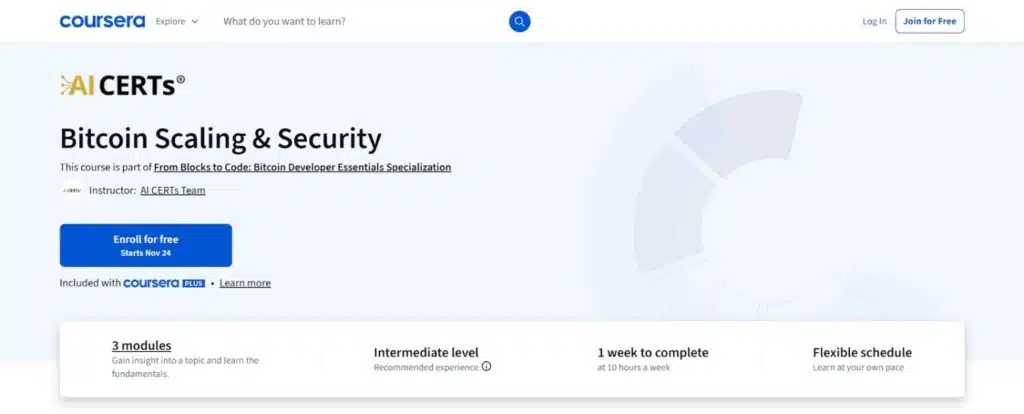
It looks at cryptographic foundations, double-spending problems, and network security. Perfect for students who wish to learn more about Bitcoin dynamics but already have a basic understanding of blockchain technology.
5. Bitcoin Transaction & Network Security
| Provided By | AI CERT |
| Instructor | AI CERTs Team |
| Level | Intermediate |
| Modules | 3 |
| Duration | 10 hours a week |
| Assignments | 3 |
| Languages | Available in English only |
AI CERT offers an intermediate-level course called Bitcoin Transaction & Network Security, which focuses on comprehending Bitcoin transactions and guaranteeing network security. It is intended for students who are familiar with the fundamentals of blockchain technology and wish to learn more about the technical workings of Bitcoin.
Students gain knowledge of Bitcoin transaction structures, mining procedures, security guidelines, and methods for safeguarding wallets and network integrity. Learners gain practical knowledge of Bitcoin’s transaction and security procedures through a combination of texts, video lectures, and hands-on activities.
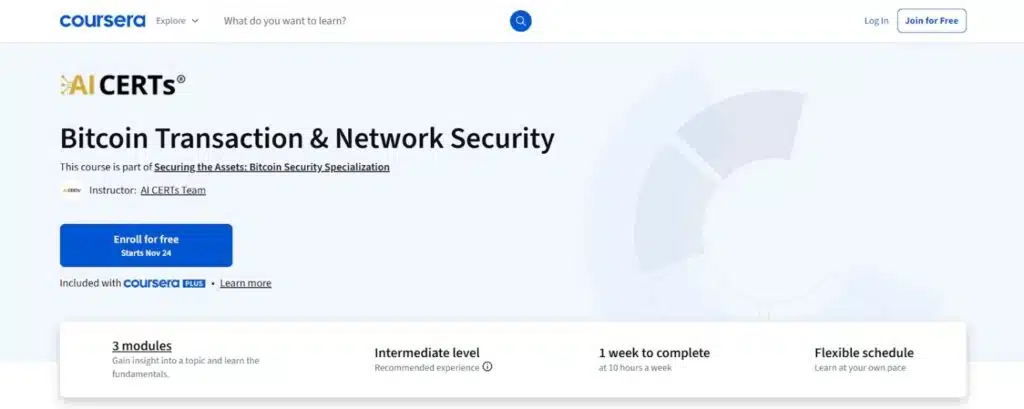
The course also helps to gain knowledge of network assaults, mining procedures, and transaction scripts. It’s designed for intermediate learners wishing to increase their grasp of Bitcoin security.
6. From Blocks To Code: Bitcoin Developer Essentials
| Provided By | AI CERT |
| Instructor | AI CERTs Team |
| Level | Intermediate with some coding experience |
| Courses | 3 |
| Duration | 10 hours a week (~4 weeks) |
| Languages | Available in English only |
The AI CERTs Team teaches the intermediate-level From Blocks to Code: Bitcoin Developer Essentials specialization, which is intended for students with some coding experience who wish to master Bitcoin development. The practical skills for creating, verifying, and overseeing Bitcoin transactions and applications are the main focus of this course series.
The course concentrates on real-world tasks including building wallets, verifying transactions, and mastering the principles of Bitcoin coding. Through texts, video lectures, and practical exercises, students gain expertise that closely mimics real-world blockchain development scenarios.
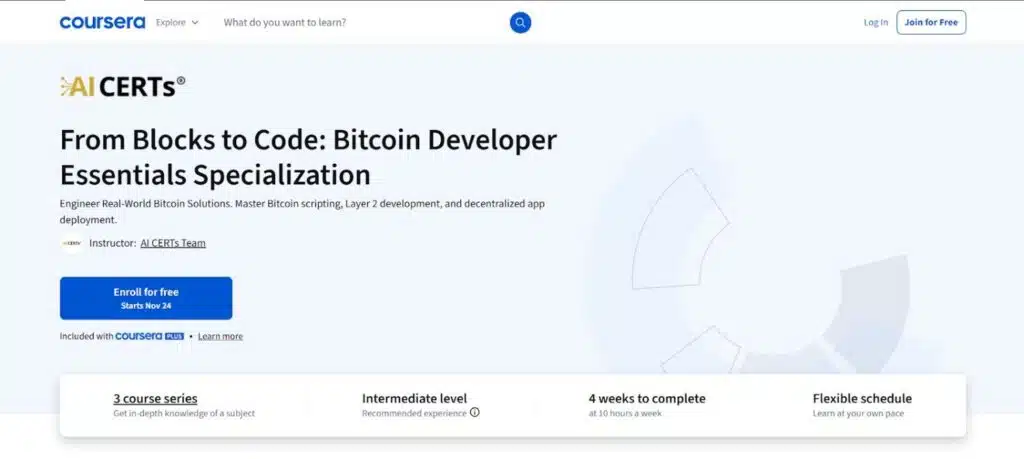
The course takes about 4 weeks to complete considering all the other courses included in it. Aspiring Bitcoin developers who already have a quiet understanding of blockchain and programming will find this curriculum suitable.
7. Blockchain Security – Intermediate Practices
| Provided By | Learn Quest |
| Instructor | Howard Poston |
| Level | Advanced |
| Modules | 5 |
| Duration | 10 hours a week (~2 weeks) |
| Assignments | 27 |
| Languages | Available in English only |
The advanced course Blockchain Security – Intermediate Practices, taught by Howard Poston and given by LearnQuest, is intended for developers and cybersecurity experts who wish to improve their comprehension of blockchain security threats. It focuses on finding weaknesses, protecting smart contracts, and putting best practices for blockchain applications into practice.
The course helps to learn about network security, Ethereum vulnerabilities, and secure coding techniques. This method enables students to apply ideas in useful, real-world situations.
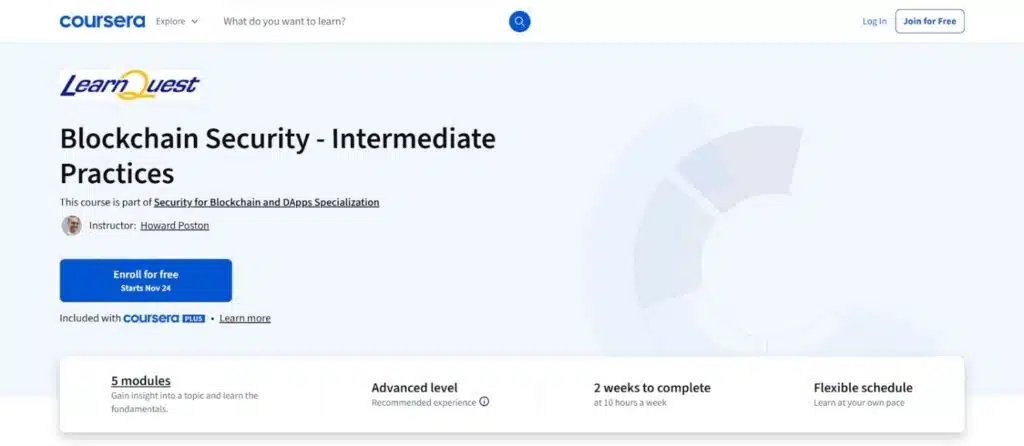
There are 27 assessment tasks, which will require two weeks to complete. It’s ideal for developers or cybersecurity professionals aiming to enhance blockchain security skills.
8. Bitcoin Integration & Future Trends
| Provided By | AI CERT |
| Instructor | AI CERTs Team |
| Level | Advanced |
| Modules | 5 |
| Duration | 10 hours a week |
| Assignments | 2 |
| Languages | Available in English only |
For students who wish to learn the practical application of blockchain technology and Bitcoin, AI CERT offers an advanced course called Bitcoin Integration & Future Trends. Integration techniques, system interoperability, and new developments in cryptocurrency applications are the main topics of the course.
Students gain knowledge about installing SDKs and APIs, integrating blockchain protocols, and comprehending acceptance and scalability issues. Readings, interactive activities, and video courses offer useful insight into using blockchain and Bitcoin solutions in practical contexts.
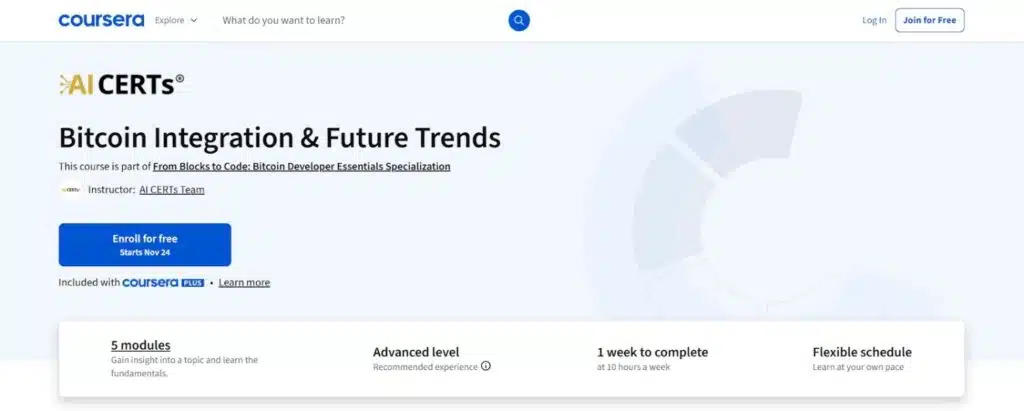
It is ideal for those who wish to get insight into real-world deployment since it teaches them about developing protocols, blockchain adoption problems, and system interoperability.
9. Advanced Blockchain Development & Solidity Projects
| Provided By | Packt |
| Instructor | Packt-Course Instructors |
| Level | Advanced |
| Modules | 6 |
| Duration | 10 hours a week |
| Assignments | 8 |
| Languages | Available in English only |
Packt offers an advanced course called Advanced Blockchain Development & Solidity Projects, which is intended for developers who wish to gain practical experience creating decentralized apps and smart contracts with Solidity. It emphasizes useful blockchain development techniques that are extremely applicable to actual projects.
It concentrates on creating DApps, putting smart contracts into practice, and finishing project-based tasks that hone their blockchain and coding skills. The use of interactive projects, readings, and video lectures guarantees that students acquire useful, usable skills.
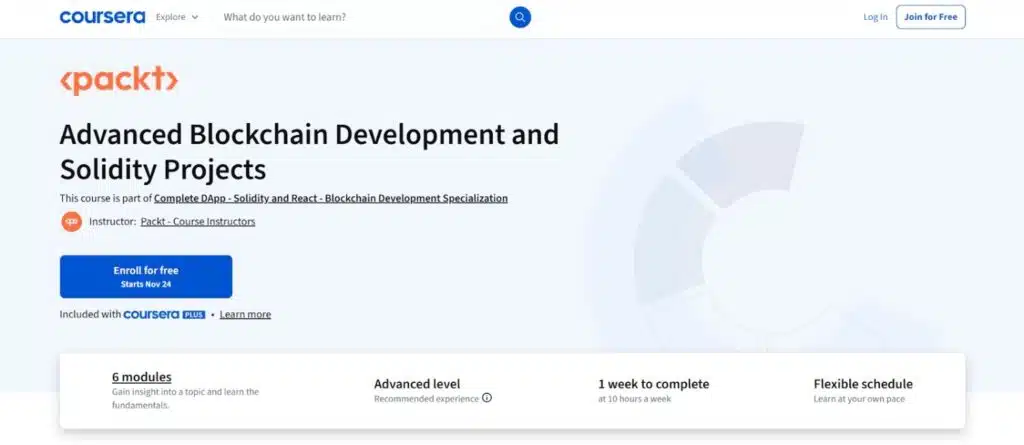
Students gain practical experience with DApps, smart contracts, and project-based learning. It is intended for seasoned engineers who wish to become practically proficient in blockchain development.
Which Crypto Course On Coursera Is Best For All Types Of Learners?
The best course on Coursera really depends on your skill level and learning goals, but here are some recommendations to help you choose:
- Beginner Level: If you’re just starting out, I would suggest “Introduction to Blockchain Technologies,” which provides a solid foundation in blockchain concepts, cryptocurrency basics, and practical applications without requiring any prior knowledge.
- Intermediate Level: For those with some experience, “From Blocks to Code: Bitcoin Developer Essentials” specialization by the AI CERTs Team offers practical coding exercises, Bitcoin development knowledge, and a deeper understanding of blockchain mechanics.
- Advanced Level: For developers and blockchain specialists looking to gain hands-on expertise, the “Advanced Blockchain Development & Solidity Projects” course provides advanced coding projects, smart contract development, and in-depth security insights.
Tip: Start with a course that matches your level and then gradually move up to intermediate and advanced courses.
Related Reads:
Conclusion: Coursera Provides A Range Of Courses On Crypto From Beginner To Advanced
Coursera has a wide choice of courses appropriate for all skill levels, from total novices to seasoned developers, if you want to learn about cryptocurrencies and blockchain. These courses provide both theoretical knowledge and practical skills by covering the principles of blockchain and real-world applications.
To lay a solid basis, I advise beginning with a beginner course and progressively advancing to intermediate and advanced courses to obtain practical, career-ready experience. You can successfully navigate the cryptocurrency space and gain the knowledge required to thrive in the quickly changing digital finance ecosystem by following this learning route.