You do not have to be a former professional player to become a football scout. You do not need a degree either. You need to know the game, notice what other people might miss, and explain your views clearly.
The harder part is getting someone to give you a chance. Calling yourself a scout is not enough. Clubs want to see what you can do. That means watching matches, writing reports, keeping your best work together, and meeting people who already work in football.
This guide breaks down what football scouts actually do, the skills you need, how to gain experience, which tools and courses are worth your time, and how to land your first scouting opportunity.
What Does a Football Scout Actually Do?
A football scout watches players, studies their performances, and shares their views with a club, agency, or federation.

The job is simpler and quieter than many people think. You watch full matches, take notes, and write reports. Many reports may not lead to anything, and that is normal.
The scouts who stay in the job are the ones who enjoy watching football, studying players, and doing the work every day. They enjoy the process, not just the idea of being a scout.
The Different Types of Football Scouts
Football scouting isn’t just one job. There are a few different roles, and scouts often do more than one.
- Talent ID scout: Looks for young and grassroots players who could develop into good players.
- Recruitment scout: Finds players who match a club’s playing style, needs, and budget.
- Data scout: Uses statistics and data to identify and compare players.
- Video scout: Watches matches and players online using platforms such as Wyscout.
- Opposition scout: Studies upcoming opponents and gives coaches useful information about their team and players.
Start with the type of scouting that fits the way you like to work. You can learn the other areas later.
For aspiring scouts looking to practice their skills in a competitive league environment, India’s top-tier football competition offers an excellent starting point with a growing mix of domestic and international talent across all franchises. The ISL 2026-27 13th Season features clubs with professional scouting departments actively recruiting talent from I-League, state leagues, and youth academies, making it one of the most accessible entry points for scouts looking to build a career in Asian football. Attending ISL matches, writing detailed player reports, and networking with club recruitment staff can give aspiring scouts the hands-on experience needed to break into the profession.
How Hard Is It to Become a Football Scout?
Becoming a football scout can be difficult, but it is possible. Most scouting jobs come through contacts and recommendations rather than job adverts.
That means sending your CV to lots of clubs is often not enough. Building relationships and getting your work noticed can make a big difference.
For many beginners, the first opportunity can take anywhere from six months to two years. Some people get there sooner.
The hardest part is often going from getting qualified to landing your first job. Having a solid portfolio and meeting the right people can make that step a little easier.
Do You Need Qualifications to Become a Football Scout?
You don’t need a formal qualification to work as a football scout. Clubs tend to care more about your scouting ability and the quality of your work than the certificates you hold.
There are still a few things worth knowing:
| Requirement | Details |
|---|---|
| Minimum age | Usually 18 |
| Playing career | Not required |
| DBS check | Needed if you work with children |
| Good free starting point | FA Talent Identification course |
You don’t need to have played football professionally to become a scout. What matters is being able to watch players carefully, understand the game, and explain what you see.
Skills You Need to Become a Football Scout
Good football scouts have a few key skills. You can learn and improve all of them with practice.
- Know the game: Understand positions, formations, tactics, and different styles of play.
- Watch players closely: Look at their movement, decision-making, technique, and how they respond during a match.
- Write clearly: Keep your reports simple, honest, and easy to follow.
- Understand basic data: Learn how to read common football stats and use them to back up your views.
- Be consistent: It can take time to make progress, so keep watching games, taking notes, and writing reports.
You don’t need money or a famous name to build these skills. You need practice and plenty of time watching football.
How to Become a Football Scout: Step by Step
There’s no single route into football scouting, but these steps can help you get started.
Step 1: Build Your Football Knowledge
Watch games like a scout, not just a fan. Ask yourself why a team presses, why a midfielder drops deep, or why a striker moves into wide areas.

Watch lower-league games too, not just the Premier League. There’s often less coverage, which gives you more chances to find players others may miss.
Step 2: Learn How to Evaluate Players
Use the same checklist when watching every player. This helps you stay fair and spot the same things each time.
Watch full matches instead of only highlights. Highlights show the best moments but often leave out mistakes and poor decisions.
It’s also worth learning some basic stats, such as expected goals (xG), pass completion, and defensive actions. Use the numbers to support what you see, not to make the decision for you.
Step 3: Build a Scouting Portfolio
Your scouting reports can act as your CV. They show clubs and agencies what you can do.
If you’re new to writing scouting reports, start with a simple structure like this:
| Section | What to write |
|---|---|
| Summary | Your overall view of the player and your recommendation |
| Strengths | Three or four clear examples from the match |
| Weaknesses | Areas where the player needs to improve |
| Role fit | The position and type of system that suit the player |
| Verdict | Sign, monitor, or pass |
Write reports on players from smaller leagues. One strong report is better than several rushed ones.
Step 4: Share Your Work Online
Share your reports on LinkedIn and X. This gives people a chance to see your work.
Don’t wait until everything is perfect. The more reports you publish, the better you’ll get at scouting and writing.
Step 5: Build Your Network
Networking is about building real relationships, not collecting followers.
Connect with scouts and analysts who are a little further ahead than you. Read their work and leave useful comments. Help where you can before asking for something.

You can also attend football events, meetups, and club open days. These can give you a chance to meet people working in the game.
Step 6: Get Your First Experience
Your first scouting role may be unpaid, especially when you are starting out.
Look for opportunities with grassroots clubs, academies, and non-league teams. You can also look for freelance work with scouting agencies.
The main goal at this stage is to gain experience and build a track record.
Step 7: Keep Going
Scouting takes time. You may not see results in the first few months, so keep watching games, writing reports, and meeting people in the game.
The work you do today can lead to an opportunity much later. Keep improving and keep showing people what you can do.
Football Scouting Courses: Are They Worth It?
You don’t need to take a course to become a football scout. Still, a good course can give you a clear path to learn, feedback on your work, and opportunities to meet people already working in the industry.
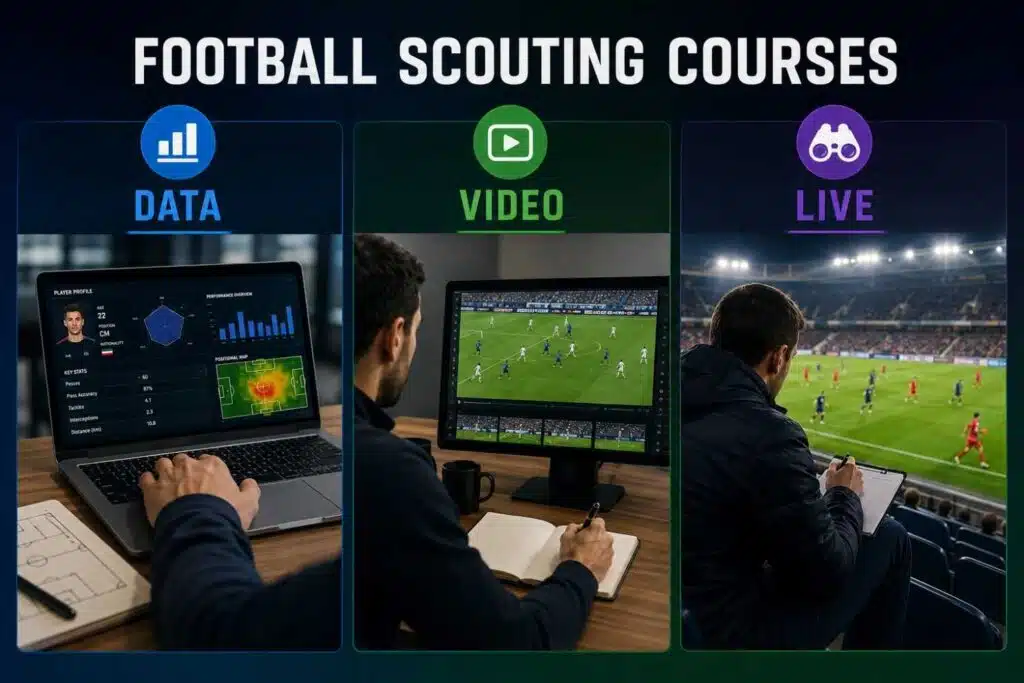
Most scouting courses cover three main areas: data, video, and live scouting. Choose the one that interests you most and start there.
Here’s a rough idea of what different courses can cost:
| Level | Example | Cost |
|---|---|---|
| Free start | FA Talent ID | Free |
| Entry level | Introductory video scouting course | About $45 |
| Professional | Video or data scouting courses | $290 to $1,800 |
| Advanced | UEFA Elite Scout Programme | $9,000 |
The PFSA is another option and is well known in the UK. The UEFA Elite Scout Programme is aimed at people who already have some experience in football scouting.
Before paying for a course, think about what you actually need. A course can help you learn, but it won’t replace watching games, writing reports, building a portfolio, and meeting people in the game.
How to Choose a Good Course
Don’t choose a course just because it has a well-known name. Look at what it actually offers.
- Check the tutor: Look for someone with real experience working at a club or in scouting.
- Look for practical work: A good course should give you assignments and feedback on your reports.
- Check the certificate: A certificate can be useful when showing your training to clubs or agencies.
- Match it to your goals: Choose a course that fits your budget and the kind of scouting you want to do, whether that’s live, video, or data scouting.
Tools and Software Every Scout Should Know
You don’t need to learn every scouting tool at once. Start with one and get comfortable using it. That can already give you an advantage when applying for scouting roles.
- Wyscout / Hudl: Widely used for watching matches, studying players, and creating video clips.
- StatsBomb: Provides football data and statistics that can help you study player performances.
- Transfermarkt: A free source of player information that is useful for practice and research.
If you are starting with Wyscout, learn how to search for players, find specific actions, create clips, and use filters. These are useful skills for anyone looking to work in modern football scouting.
How Much Do Football Scouts Earn?
Football scouting pay can start quite low and increase as you gain experience and take on more responsibility. If you are starting out, it is worth focusing on building experience and a strong reputation first.
| Role | Typical pay |
|---|---|
| Grassroots/volunteer | Unpaid or expenses |
| Freelance scout | $30 to $100 per match |
| Academy scout | $30,000 to $60,000 |
| First-team scout | $40,000 to $80,000+ |
| Head of recruitment | $80,000 to $130,000+ |
Entry-level scouting jobs can pay around $25,000 to $40,000. Experienced scouts and senior recruitment staff can earn much more, with some senior roles paying over $130,000.
Pay varies depending on the club, league, location, experience, and level of responsibility.
How to Get Your First Football Scouting Job
Don’t wait for the perfect job advert. Your first opportunity may come from the work you have already done and shared.
Here are a few places to look:
- Club websites and job boards: Check for scouting and recruitment roles that are currently being advertised.
- LinkedIn: Follow and connect with scouts, analysts, and recruitment staff. Don’t just look at job listings.
- Grassroots and academy clubs: Ask if they have any volunteer scouting opportunities. It’s a good way to get some hands-on experience.
Women’s football and lower-league recruitment are also worth exploring. These areas may have fewer scouts, which can give you more opportunities to get noticed.
Keep adding to your portfolio as you look for opportunities. The work you put in can help you land your first role.
Conclusion: Learn the Game. Build Your Portfolio. Network Relentlessly
Becoming a football scout is possible without a professional playing career or a big budget. You need to understand the game, learn how to judge players, write clear reports, and keep putting your work out there.
Start with the free FA course. Write one scouting report this week and share it online. Then keep doing it.
You don’t have to have it all figured out at the start. Keep learning, watch as many games as you can, and put your work out there. If you stick with it, those efforts could eventually get you noticed and give you a chance to scout your first game.
FAQs
Yes. Start by writing scouting reports, volunteering with clubs, and sharing your analysis online. This helps you build experience and show people what you can do.
No. A strong scouting portfolio is often more useful than a degree. A background in sports science can still be helpful.
No. You don’t need to have played football professionally or at a high level to become a good scout.
You’ll usually need to be 18. If you work with children, you may also need a DBS check.
Yes. Many people start scouting part time while keeping another job.
It could take anywhere from six months to two years to get your first opportunity. There’s no set timeline. It depends on how much time you put into it, what opportunities come your way, and the people you meet along the way.