Argumentative essays are key for expressing opinions on social, educational, or current issues. Whether for school, college, exams, or professional writing, they help develop critical thinking and persuasive skills.
While presenting a strong stance, the tone should remain formal, logical, and respectful, supported by credible evidence. With proper research and practice, anyone can master this style of writing.
This guide covers what an argumentative essay is, its purpose, types, examples, and step-by-step strategies to help you write compelling and well-structured essays for 2026.
What Is The Purpose of Argumentative Essays?
The main purpose of an argumentative essay is to convince the reader to agree with your opinion using logical reasons, facts, and evidence. It improves critical thinking and writing skills.
You can also learn to structure essays better through various essay writing courses. An argumentative essay presents facts and opinions, while a persuasive essay focuses more on emotions to convince readers. Students often write these essays to present research, discuss topics, or win debates.
Popular Argumentative Essay Examples
Learning from popular argumentative essay examples is a smart way to improve writing skills. It is also worth investing in professional writing services to get expert guidance and error-free essays for academic success.
| Type | What it Focuses On | Example Topics |
|---|---|---|
| Classical | One-sided argument | “Should Plastic Bags Be Banned?” |
| Rogerian | Balanced argument | “Is Online Learning Better Than Traditional?” |
| Toulmin | Evidence-based argument | “Does Social Media Harm Mental Health?” |
Now, let’s understand how Classical, Rogerian, and Toulmin argumentative essays work and how you can effectively apply them in your writing.
1. Classical
The Classical argumentative essay is one of the oldest and most straightforward styles of argument writing.
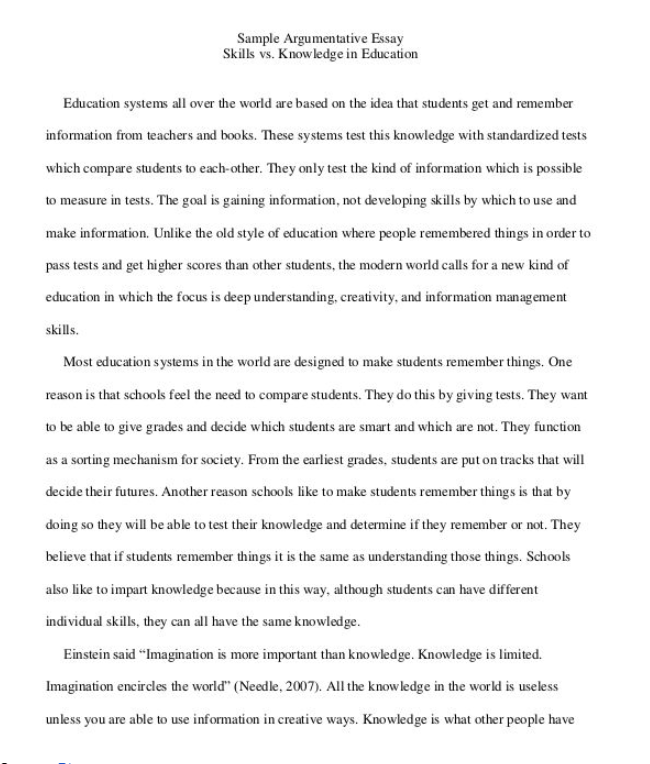
It focuses on presenting a clear thesis statement, followed by strong evidence and reasoning to support one side of the argument.
Students need to include an introduction, background information, main arguments, counterarguments with refutation, and a conclusion. This style is useful when the writer wants to convince the audience directly and confidently.
2. Rogerian
Rogerian argumentative essays focus on building mutual understanding between two sides of an argument. Instead of attacking the opposing view, this essay respects and acknowledges different opinions.
It begins with introducing the issue, explaining opposing views fairly, presenting the writer’s position, and finally suggesting a compromise or solution.
This type of essay is useful when writing about sensitive topics like politics or social issues, where balance and respect matter more.
3. Toulmin
Toulmin’s argumentative essays are based on evidence and logical reasoning. They focus on breaking down an argument into six parts.
They are claim, data (evidence), warrant (connection between claim and data), backing (support), qualifier (limitation), and rebuttal (counterarguments).
This structure helps in writing fact-based essays and research-heavy topics. It teaches students how to build arguments with clarity and proof. It is also useful for learning ways to write research proposals for academic or professional writing.
Structure Of An Argumentative Essay
To write an impactful argumentative essay, it is important to follow a proper structure that helps to organize thoughts clearly and present arguments effectively to the readers.
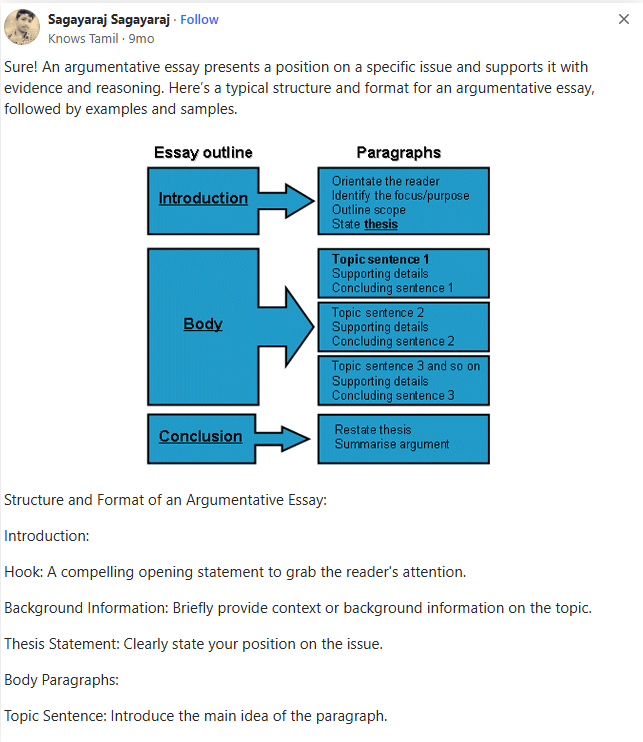
1. Introduction: The introduction provides background information about the topic, grabs the reader’s attention, and sets the tone for the essay.
2. Thesis Statement: The thesis statement presents the writer’s main argument or claim in one or two sentences, clearly directing the entire essay.
3. Body Paragraphs (Supporting Evidence): Body paragraphs present the main points with supporting evidence such as facts, examples, statistics, or expert opinions. This makes the argument stronger and more convincing for the readers.
4. Counter Arguments: This section acknowledges opposing viewpoints and refutes them logically. This helps readers understand why the writer’s position remains valid and well-supported.
5. Conclusion: The conclusion summarizes the main arguments, restates the thesis, and provides a strong closing statement that leaves a lasting impression on the readers.
In addition to this essay structure, explore 124 project topics that are best for history students, which you can consider for your next academic project.
Pro Tips To Make An Argumentative Essay Stand Out
To write an argumentative essay that truly leaves an impact, you need to follow smart writing techniques that highlight your ideas effectively and clearly.
- Choose a debatable topic that interests both you and your readers for better engagement and stronger arguments.
- Research from credible sources to support your claims and provide authentic evidence to make your essay more convincing.
- Maintain a clear structure with an introduction, thesis statement, body paragraphs, counter-arguments, and a firm conclusion.
- Use a formal and balanced tone to present your points without sounding aggressive or biased in your arguments.
- Edit and proofread your essay thoroughly to eliminate grammatical errors and improve clarity and sentence flow.
- Enroll in online writing courses and grab exclusive offers through Coursera discounts to sharpen your essay writing skills professionally.
Common Mistakes To Avoid
Many students make common mistakes while writing argumentative essays that can weaken their overall impact.
- Weak thesis statement: A weak thesis fails to give clear direction to the essay.
- Lack of evidence or unreliable sources: Your arguments lose credibility and strength without trusted sources.
- Ignoring counterarguments: Ignoring opposing views shows bias and weakens your argument’s balance.
- Writing like an emotional diary: Emotional writing reduces professionalism and distracts readers from facts.
- Overcomplicating language: Simple and clear language always communicates ideas more effectively than jargon.
How to Choose a Strong Argumentative Essay Topic
Selecting the right topic is the first step to writing a compelling argumentative essay. A strong topic not only makes your essay easier to research but also engages your reader effectively. Here’s how to choose one:
Criteria for a Good Argumentative Topic
- Debatable: There should be more than one side or perspective. Avoid topics with obvious answers.
- Relevant: The topic should be interesting and meaningful to your audience.
- Specific: Narrow your focus to make your argument clear and manageable.
- Researchable: Ensure there are enough credible sources and data to support your claims.
Examples of Topics
- Easy Topics: School uniforms, social media pros and cons, recycling practices.
- Challenging Topics: Ethical implications of AI in decision-making, climate change policies, healthcare reform.
Niche Categories to Explore
- Technology: Artificial intelligence, cybersecurity, social media regulation.
- Education: Online learning vs traditional education, student loan policies.
- Social Issues: Gender equality, freedom of speech, income inequality.
- Environment: Renewable energy, plastic pollution, climate change action.
- Health: Vaccination mandates, mental health awareness, diet and lifestyle.
- Politics: Voting age, immigration policies, government surveillance.
Trending Topics
- Emerging technologies like blockchain and AI ethics
- Global environmental initiatives and climate policies
- Health policies post-pandemic
- Education reforms in a digital-first world
Also Read:
Conclusion: Master Argumentative Essays with Practical Examples
Argumentative essays empower students and writers to present their opinions using facts, logic, and structured reasoning. Choosing the right type—whether Classical, Rogerian, or Toulmin, depends on how you want to frame and support your argument.
By understanding essay structure, common pitfalls, and effective writing techniques, you can create essays that capture attention, stay relevant, and persuade your audience.
With the right tone, credible evidence, and clear thesis, anyone can craft a powerful argumentative essay. Practice regularly, conduct thorough research, and focus on building strong arguments to make your writing truly stand out.
FAQs
Argumentative essay topics include social media impact, climate change, online education benefits, technology in classrooms, environmental pollution, animal testing, and gender equality discussions.
Popular tools include Grammarly for grammar checks, Canva for presentations, Citation Machine for references, and Outliner tools for essay structure planning.
Begin with a strong hook, background information, and a clear thesis statement that presents your opinion and prepares readers for supporting evidence and counterarguments.
Argumentative essays are useful for both college and high school students because they improve critical thinking, research ability, logical reasoning, and effective communication skills.
Summarize key points, restate your thesis in a new way, and leave readers with a thought-provoking statement that encourages reflection or action after reading.
Many educational websites, blogs, and online learning platforms offer free argumentative essay samples that help improve writing style, structure understanding, and idea development skills.